
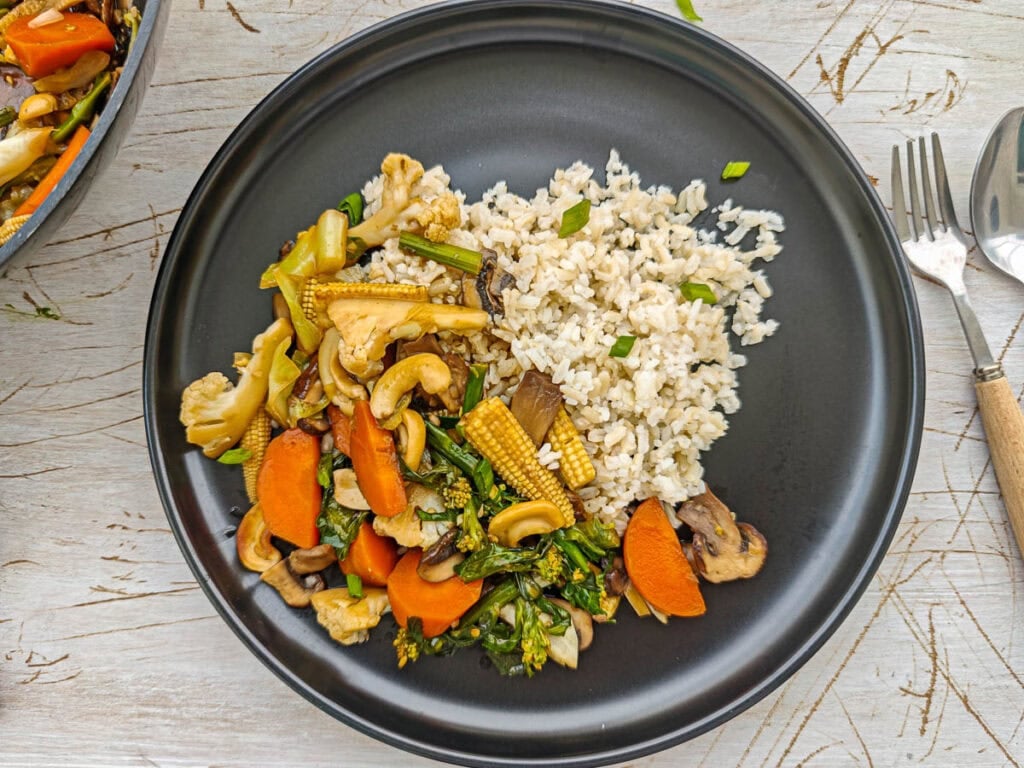
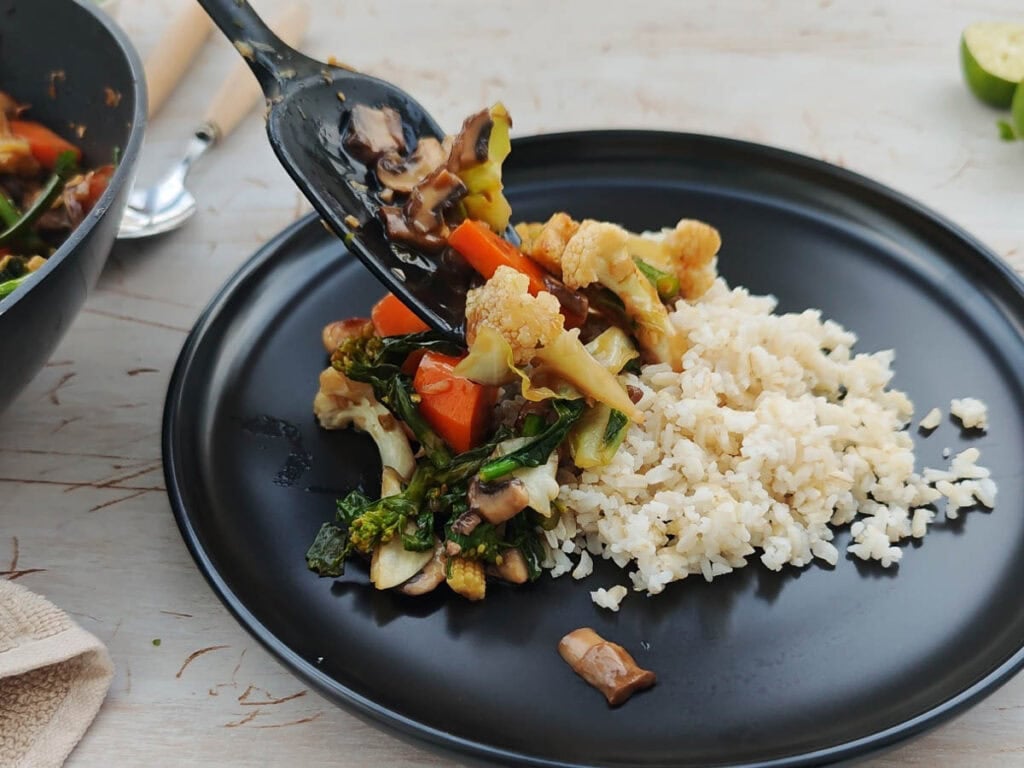
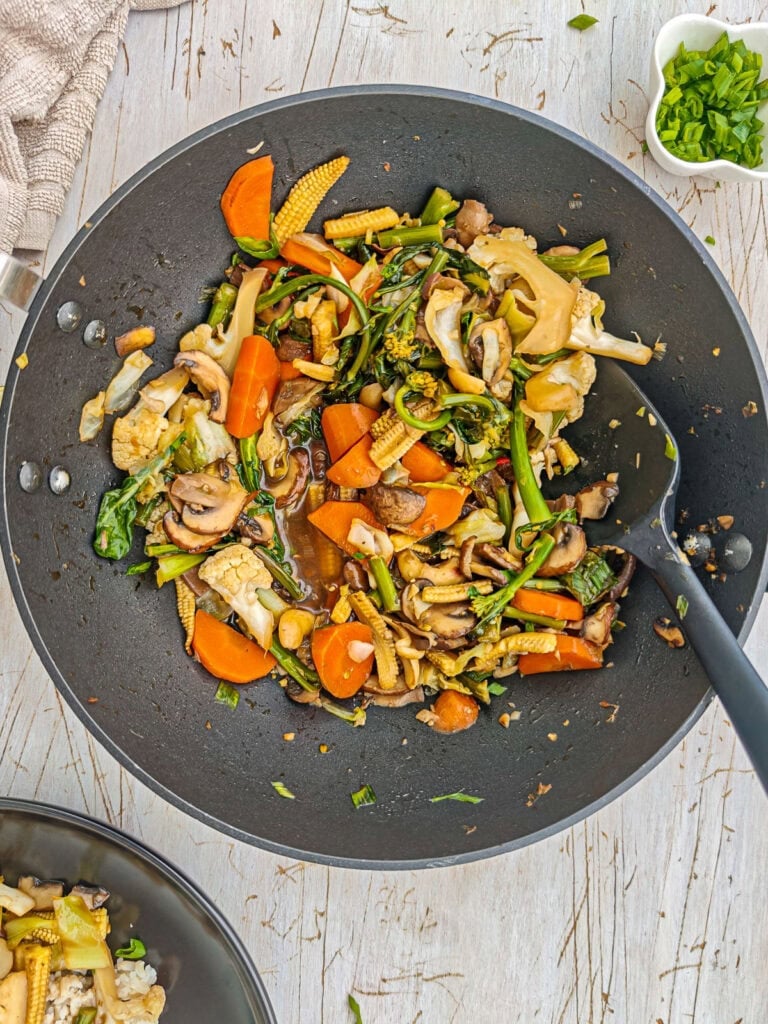
Big Thai-inspired flavor doesn’t need a complicated sauce or fancy ingredients. This easy Thai vegetable stir-fry gets its flavor from simple aromatics, two everyday sauces, crunchy cashews and a squeeze of lime. This is a pan of vegetables you will actually look forward to eating!
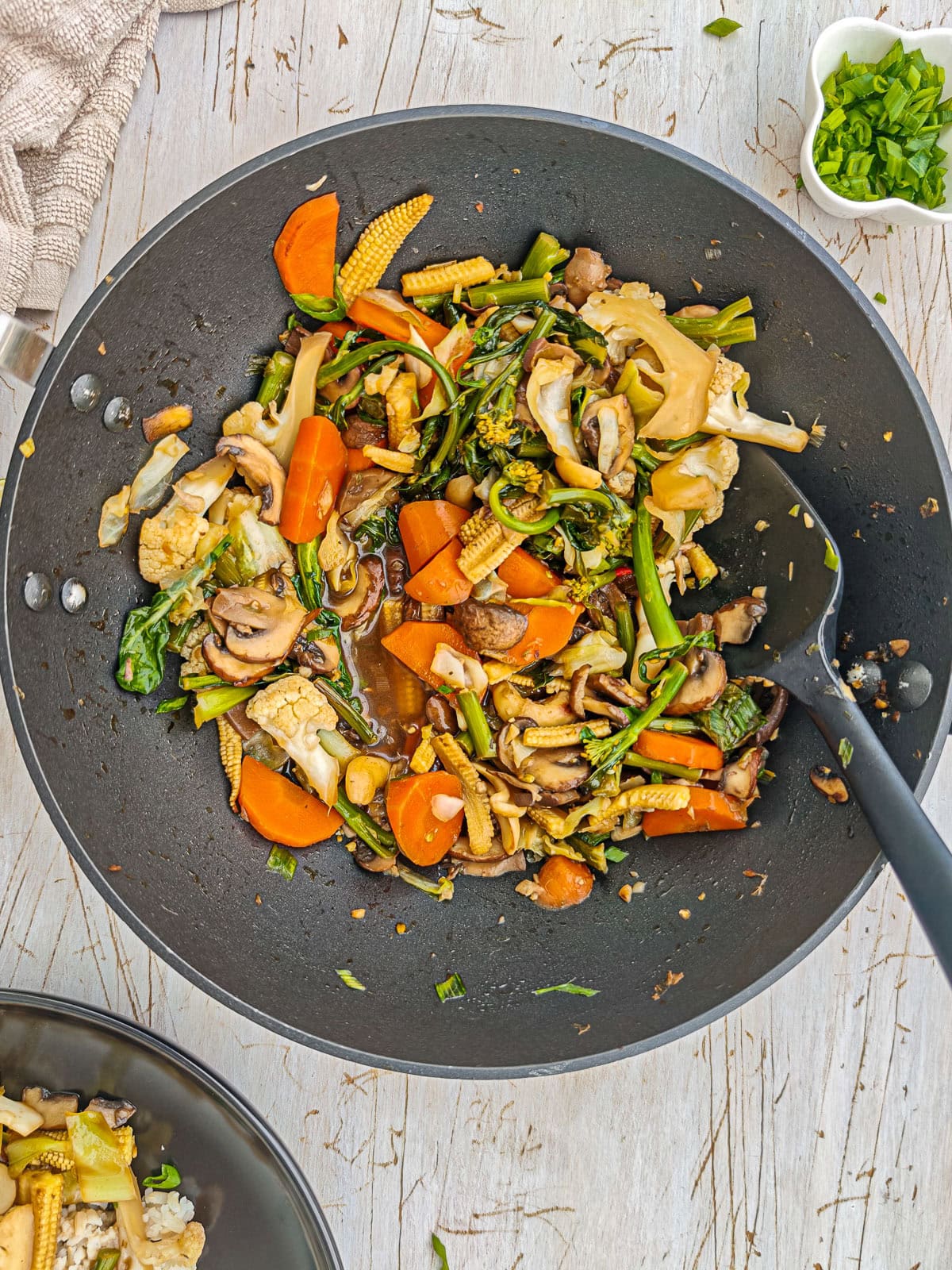
A delicious way to eat more vegetables
Some days, I just want to make a quick vegetable stir fry without pulling out half the bottles in my pantry to make a sauce. I love a good stir fry, but I also like keeping things simple, especially when I’m cooking on a busy day.
That’s when I make this Thai stir-fry vegetables.
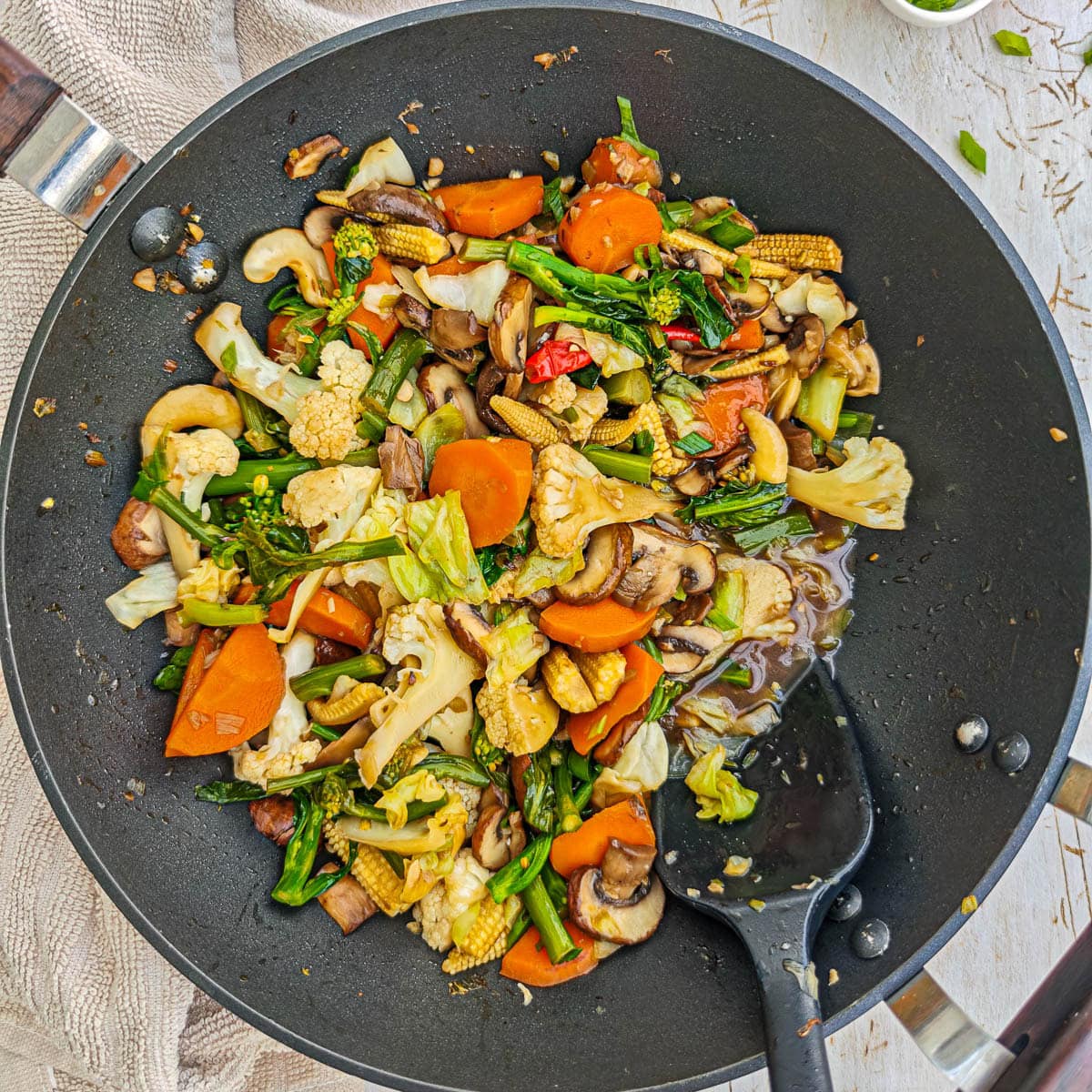
Chinese broccoli, mushrooms, carrots, baby corn, cauliflower and cabbage are tossed with garlic, Thai red chilies and crunchy cashews in a light, savory sauce made with just two ingredients: oyster sauce and low-sodium soy sauce.
It’s a healthy cashew vegetable stir fry with loads of crunch, flavor and nourishing fiber – perfect for busy weeknights or as a delicious side with rice or noodles.
Ingredients and substitutions
I took the liberty to add a couple of twists to the ingredient list of a traditional vegetable stir-fry recipe:
- Cashews: They add a delicious nutty crunch and richness to the stir fry.
- Lime juice: Adding it at the end of cooking gives a burst of freshness and the vitamin C helps absorb nutrients from the vegetables. (After learning Nutrition Science, it has become a habit for me to add it to almost anything I cook!)
- No fish sauce: I replaced it with bouillon cube. Reason? Some of my friends don’t like the fishy smell when I cook with fish sauce. It doesn’t significantly affect the flavor of chicken recipes like Basil chicken fried rice or Thai chicken green curry. But I usually avoid it in vegetarian recipes like green curry fried rice, basil tofu or this vegetable stir-fry. Feel free to use if you like it.
- No added sugar: I feel the oyster sauce has enough sweetness, so there’s no need for additional sugar.
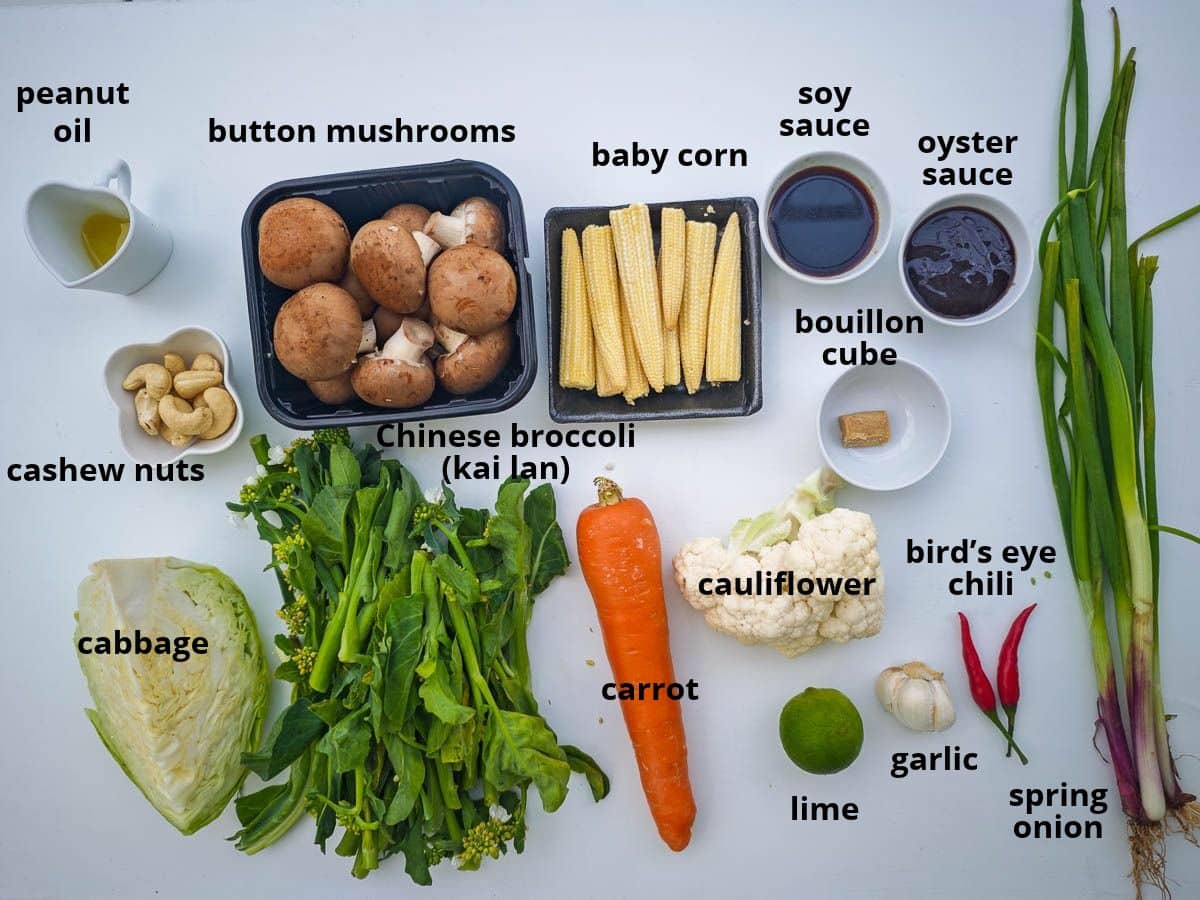
The main ingredients include:
- Vegetables: This is my go-to recipe if I want to clear the fridge. Use any veggies you have on hand. You only need to pay attention to the order in which to stir-fry them so that they get cooked, but remain crunchy. (I’ve explained the grouping below 👇)
- Mushrooms: Cremini (brown button) mushrooms add some protein. You can also use other types of mushrooms like shiitake, straw, oyster, shimeji or enoki. Not a great fan of mushrooms? Feel free to use firm tofu.
- Peanut oil: It is an ideal choice for stir-frying since it has a high smoke point. Feel free to use any oil you have. Since we are using just 1 tablespoon, it doesn’t make much difference.
- Bird’s eye chilies: They are quite hot. However, we are going to add them whole with a small slit, so the stir fry will not be as spicy as you would imagine. You can substitute with milder chilies according to your preference.
- Stir-fry sauce:
- Oyster sauce: This amazing sauce is equivalent to ten different sauces, which makes this stir-fry possible with just 2!
- Soy sauce: I prefer low sodium soy sauce. If you only have regular, light or dark soy sauce, adjust the quantities accordingly by tasting the dish. You might have to add a little less than what is specified in the recipe.
How to make Thai stir-fry vegetables: step by step
(You can find the exact measurements and instructions in the printable recipe card at the end of this page. Here are step-by-step instructions with pictures to help you easily understand the recipe.)
1. Prepare the aromatics and vegetables
Separate the white and green parts of spring onions and chop them. Mince the garlic. Make a small slit on each chili.
Separate the vegetables into 3 groups:
- Firm vegetables like carrots, cauliflower and baby corn. Chop the vegetables into roughly equal-sized pieces. You can cut the carrots into half moons, roll cut or thick strips. Separate the thick stems of Chinese broccoli from the leaves and add to this group. They make roughly 3 to 3½ cups.
- Soft vegetables like cabbage. Roughly chop them into big chunks. Add sliced mushrooms and/or diced tofu to this group. Together they make about 4 cups.
- Leafy vegetables like spinach and Chinese broccoli (kai lan). Green parts of spring onions also belong to this last group. This group makes up about 2 cups, tightly packed.
2. Stir-fry cashews and aromatics
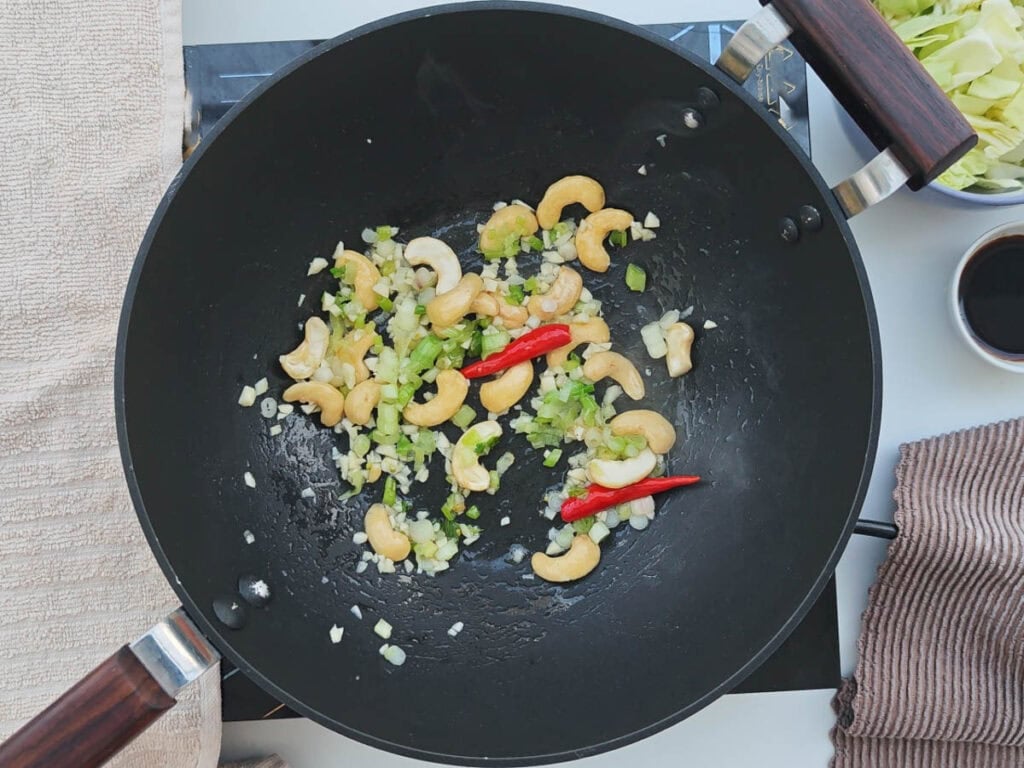
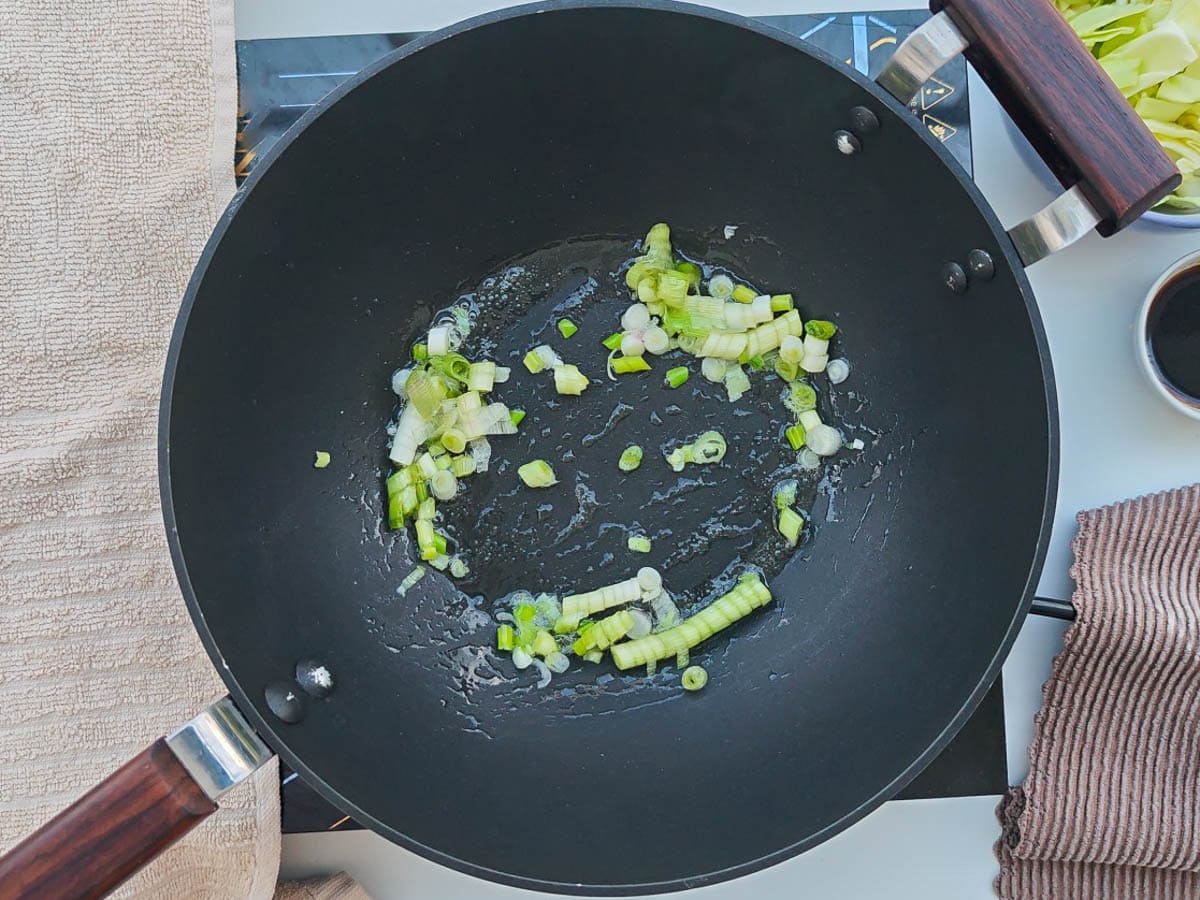
Heat peanut oil in a wok or wok pan. Add the chopped white parts of spring onions.
Stir-fry for a couple of minutes. Add cashews, minced garlic and slit Bird’s eye chilies.
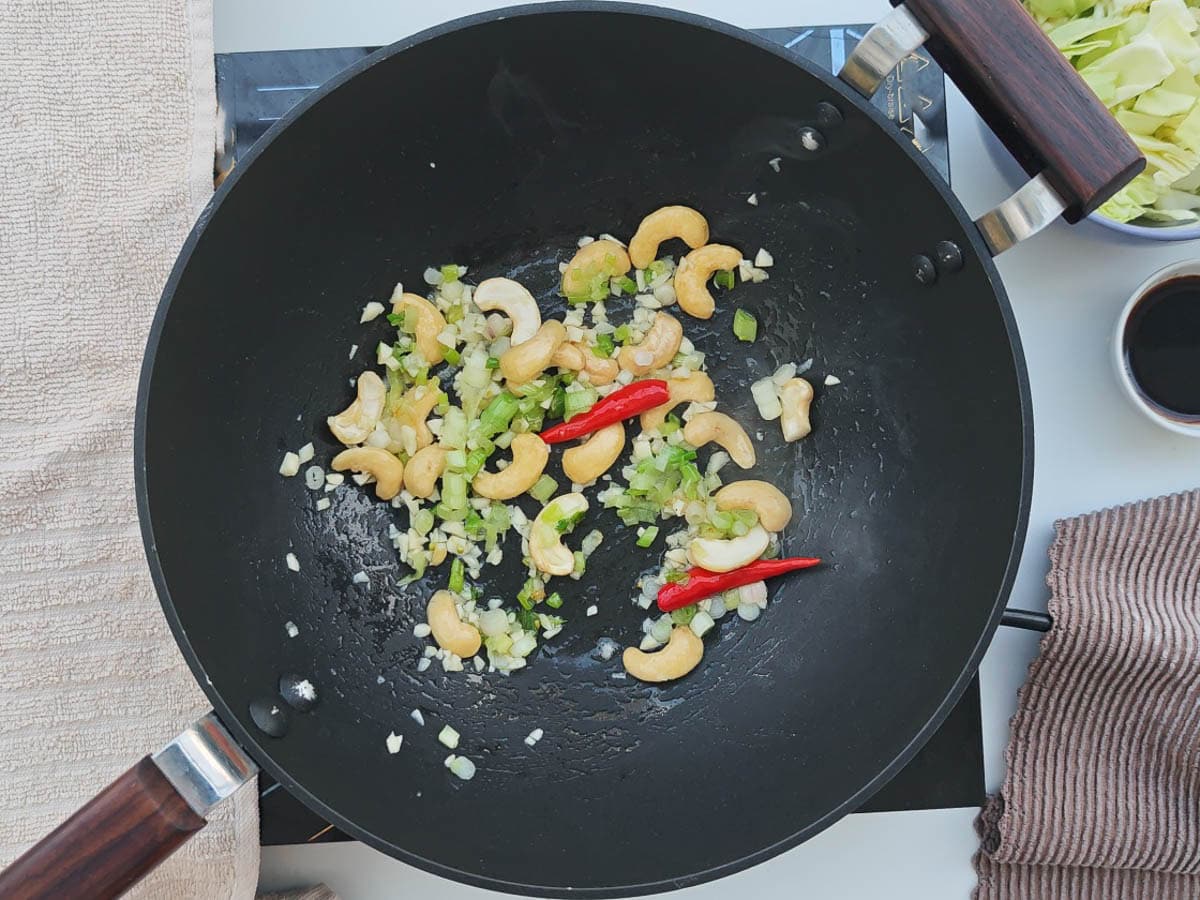
3. Stir-fry firm vegetables
Add the first group of vegetables. Stir-fry on high heat for about 5 minutes or until the carrots turn slightly soft.
You can sprinkle a little water so the veggies don’t get scorched.
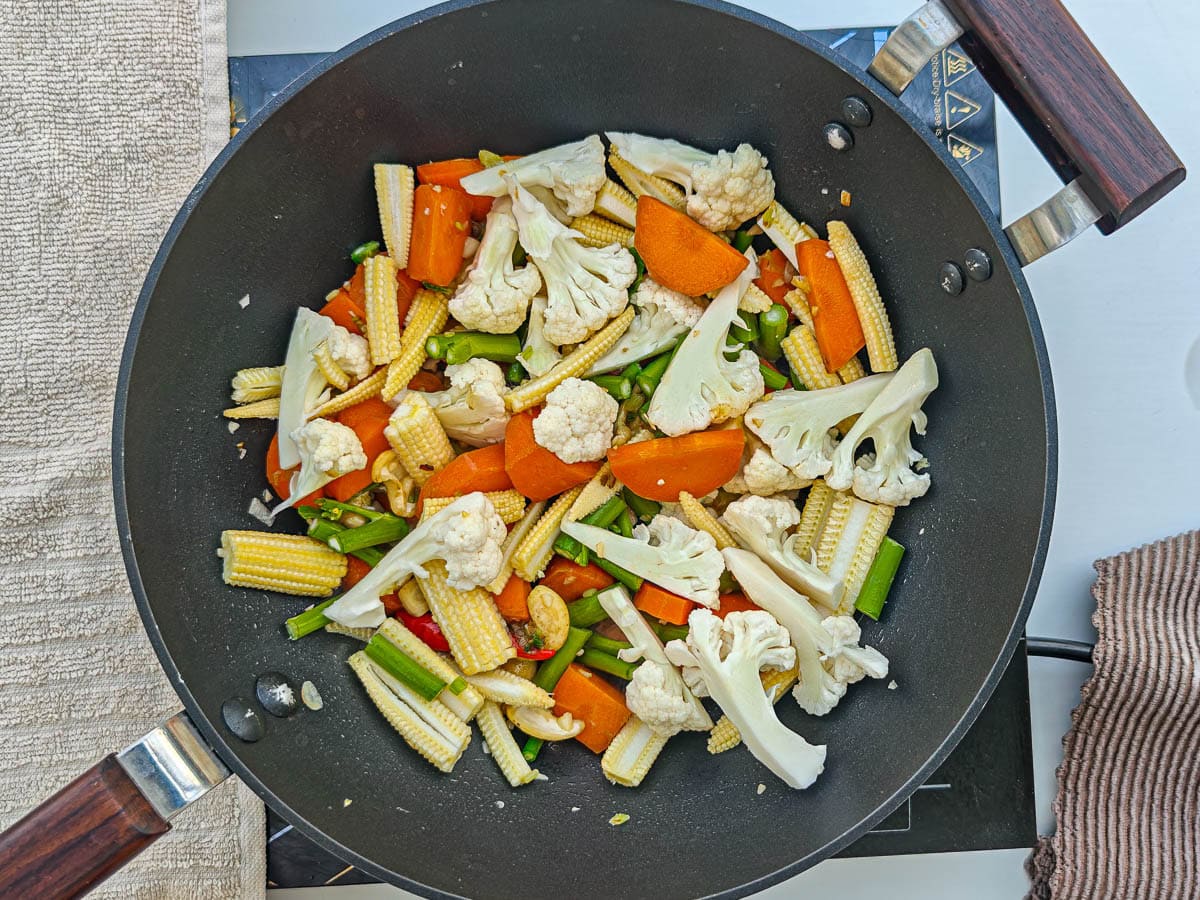
4. Stir-fry soft vegetables
Add sliced mushrooms or tofu, if using. Stir for a couple of minutes, then add chopped cabbage.
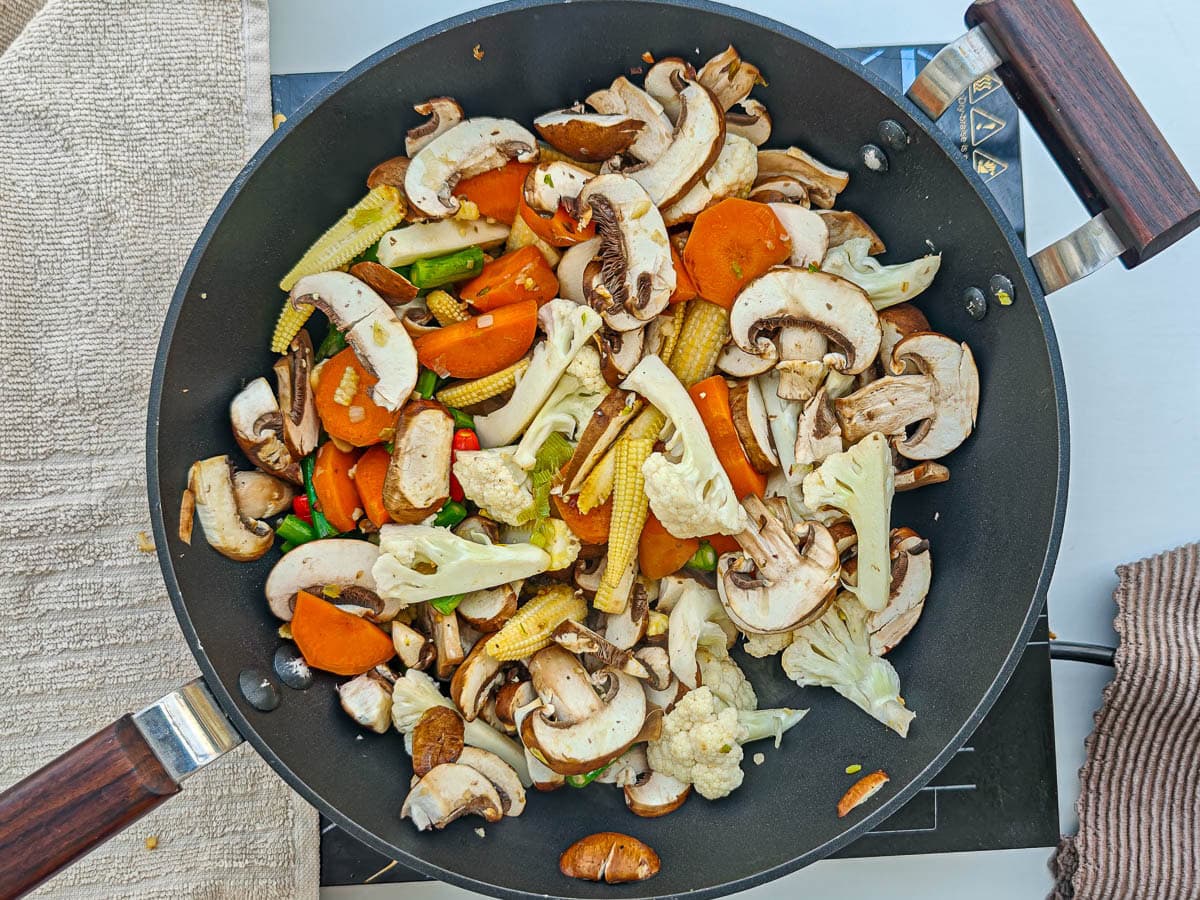
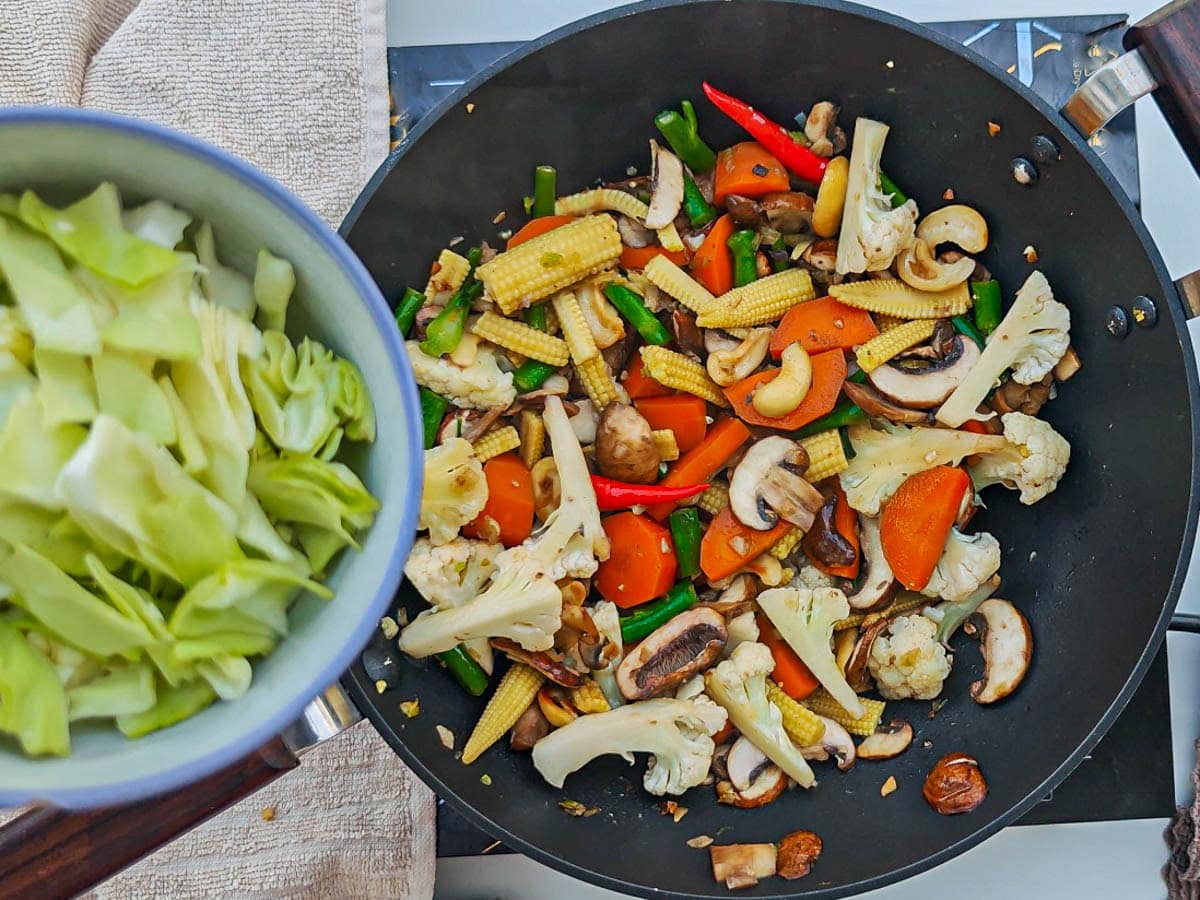
Stir for a few more minutes. Add the crushed bouillon cube.
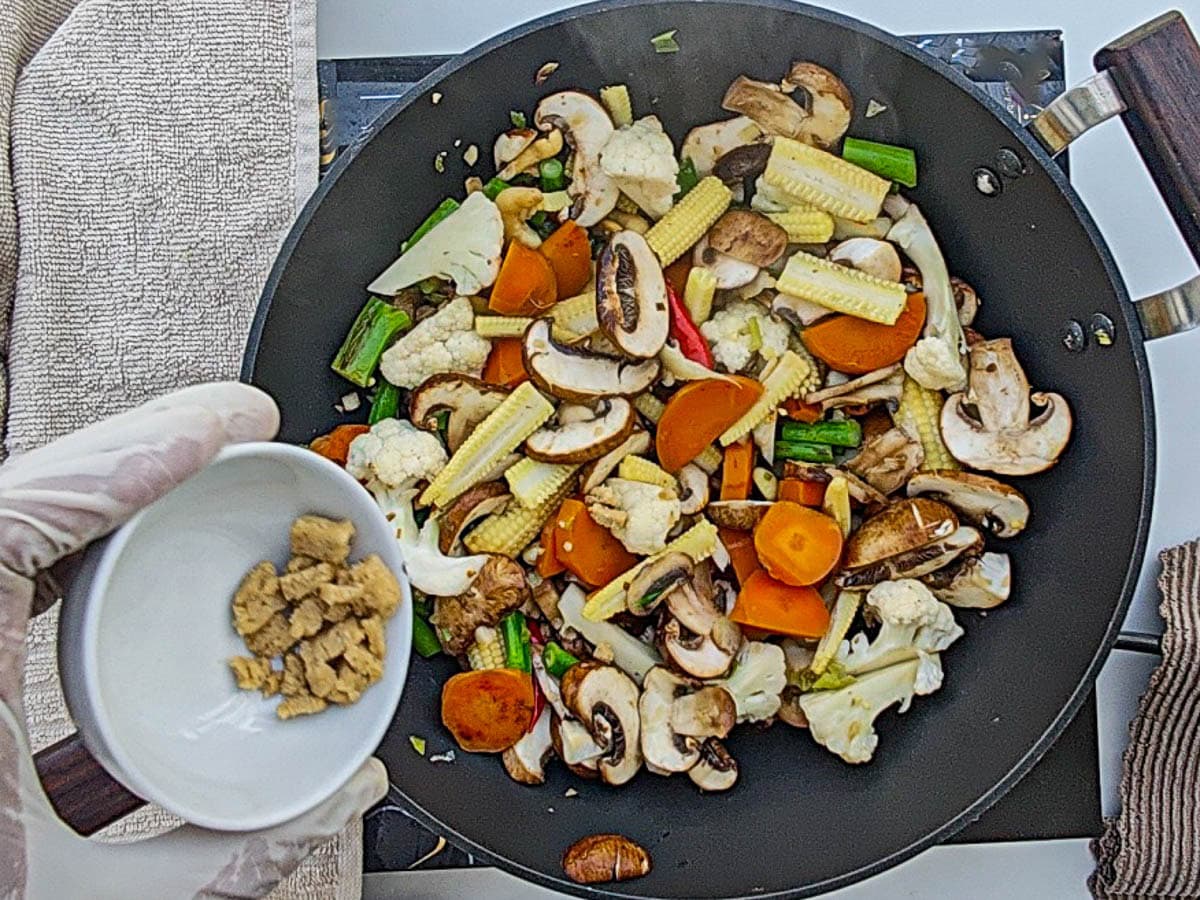
5. Stir-fry leafy vegetables
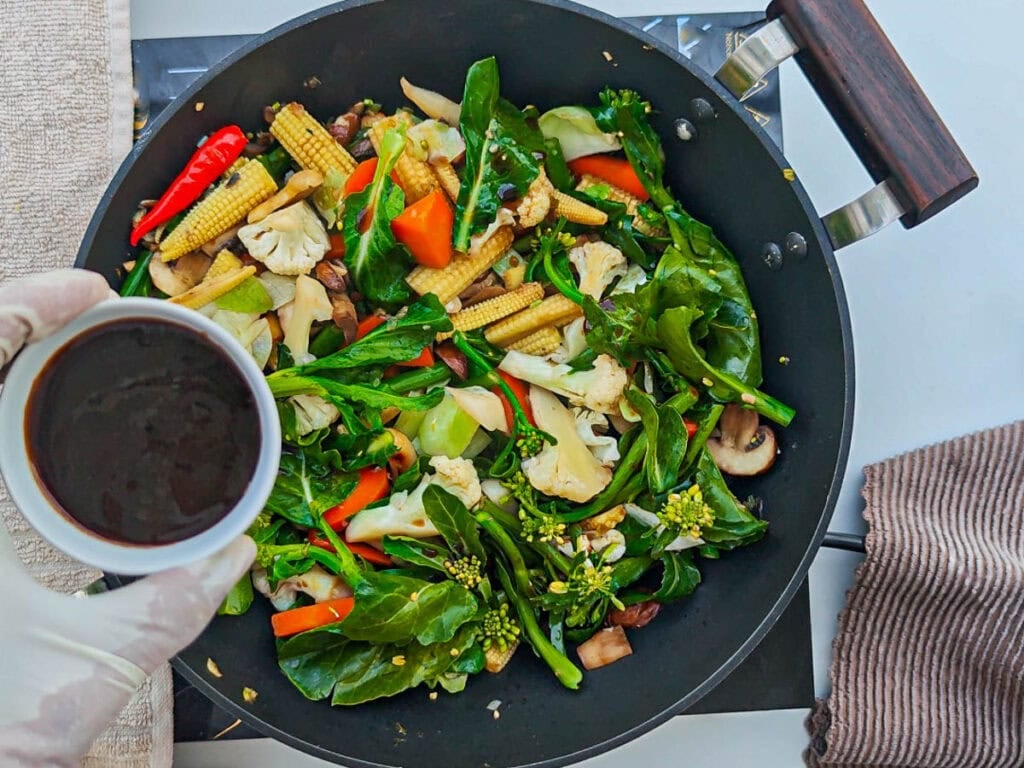
Add the third batch, green leafy vegetables and the green parts of spring onions. Usually, Chinese broccoli is used for stir-frying, since they hold their shape better than the usual spinach. You can use any kind of spinach you have, provided you don’t cook it for too long (about 1 minute is sufficient). Don’t wait for it to wilt.
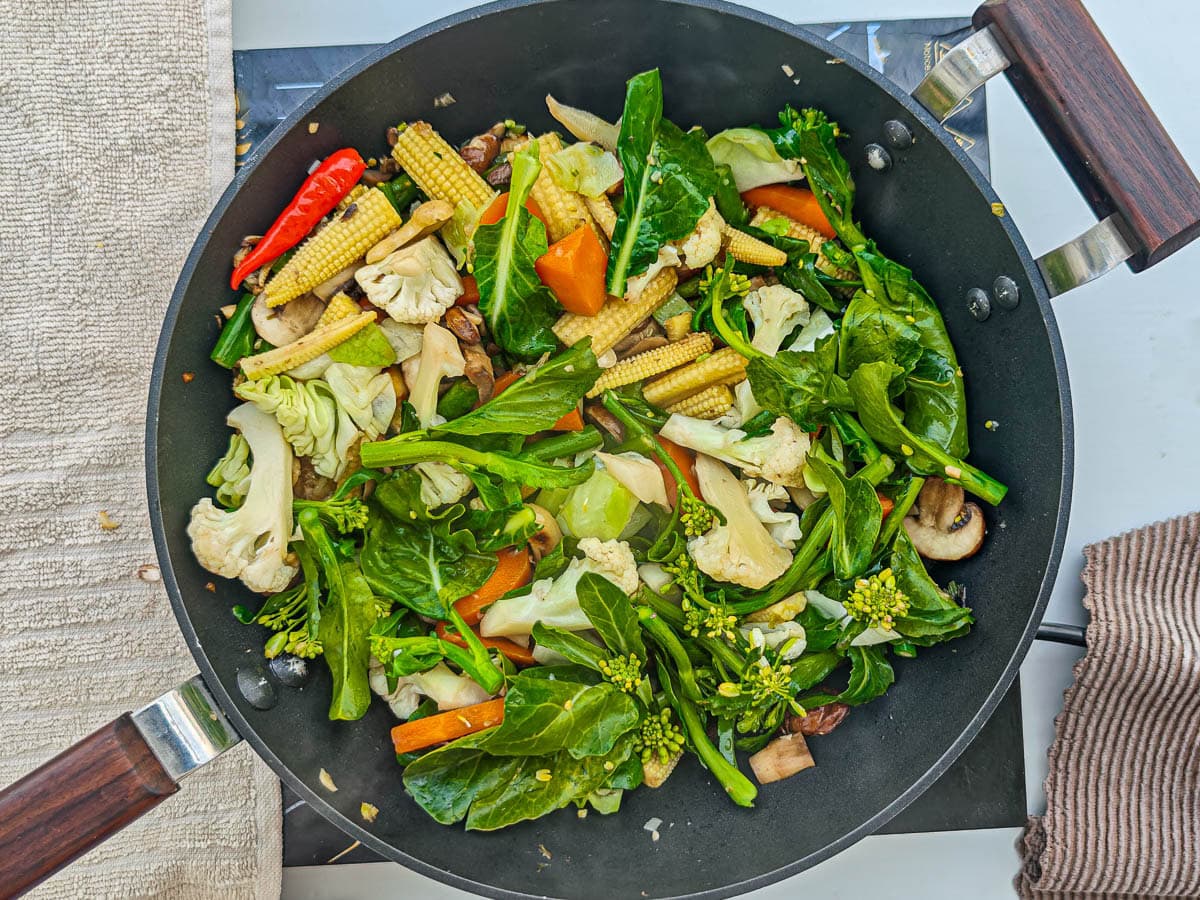
6. Finish with stir fry sauce
Add the oyster sauce and soy sauce.
Stir for a minute or two, until the sauce starts boiling.
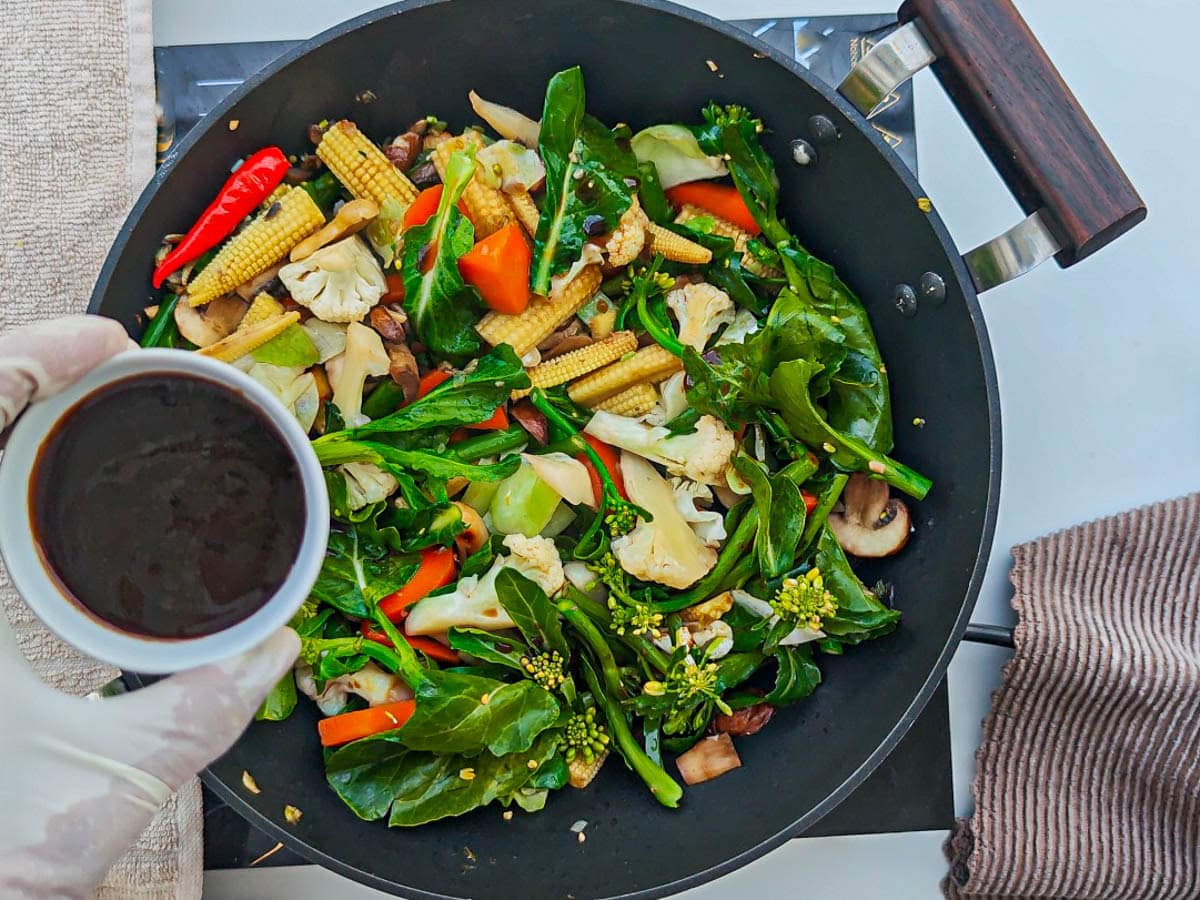
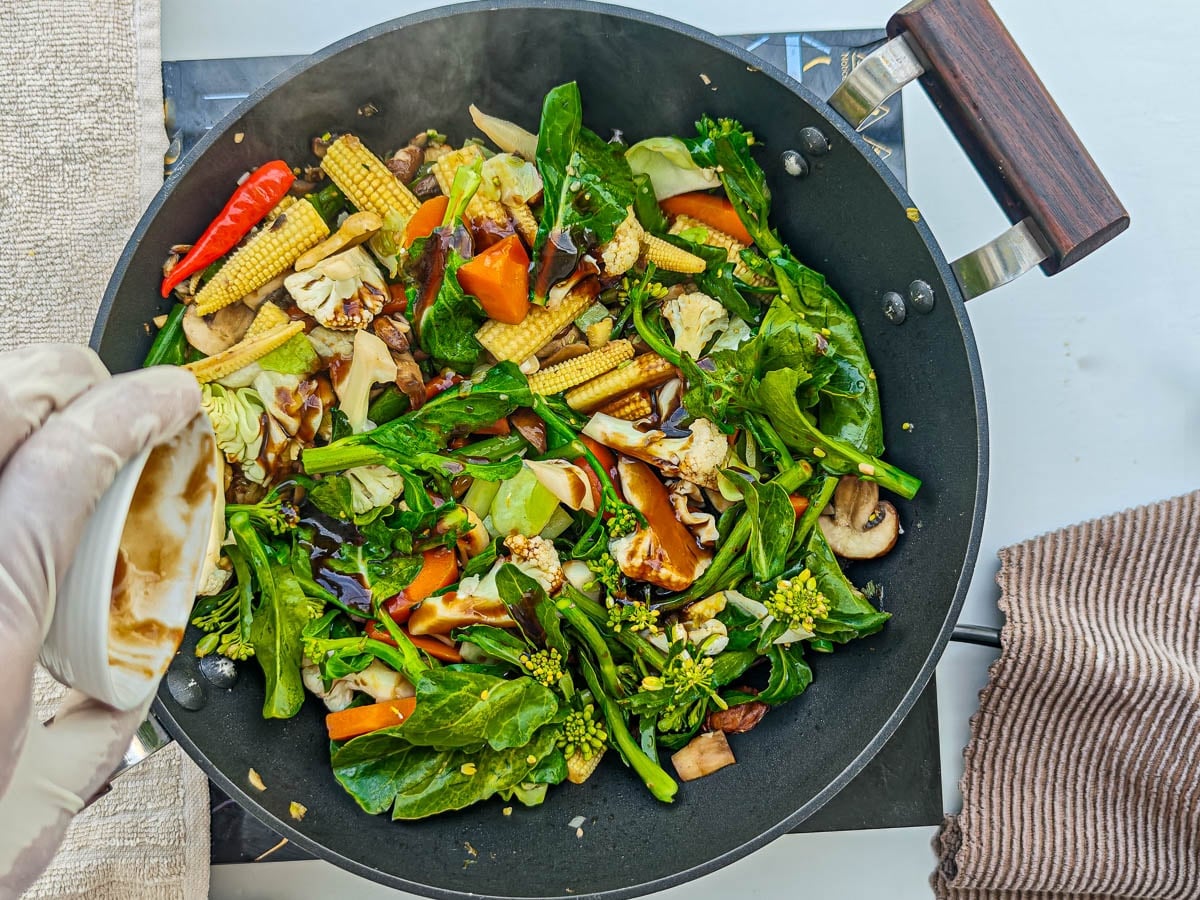
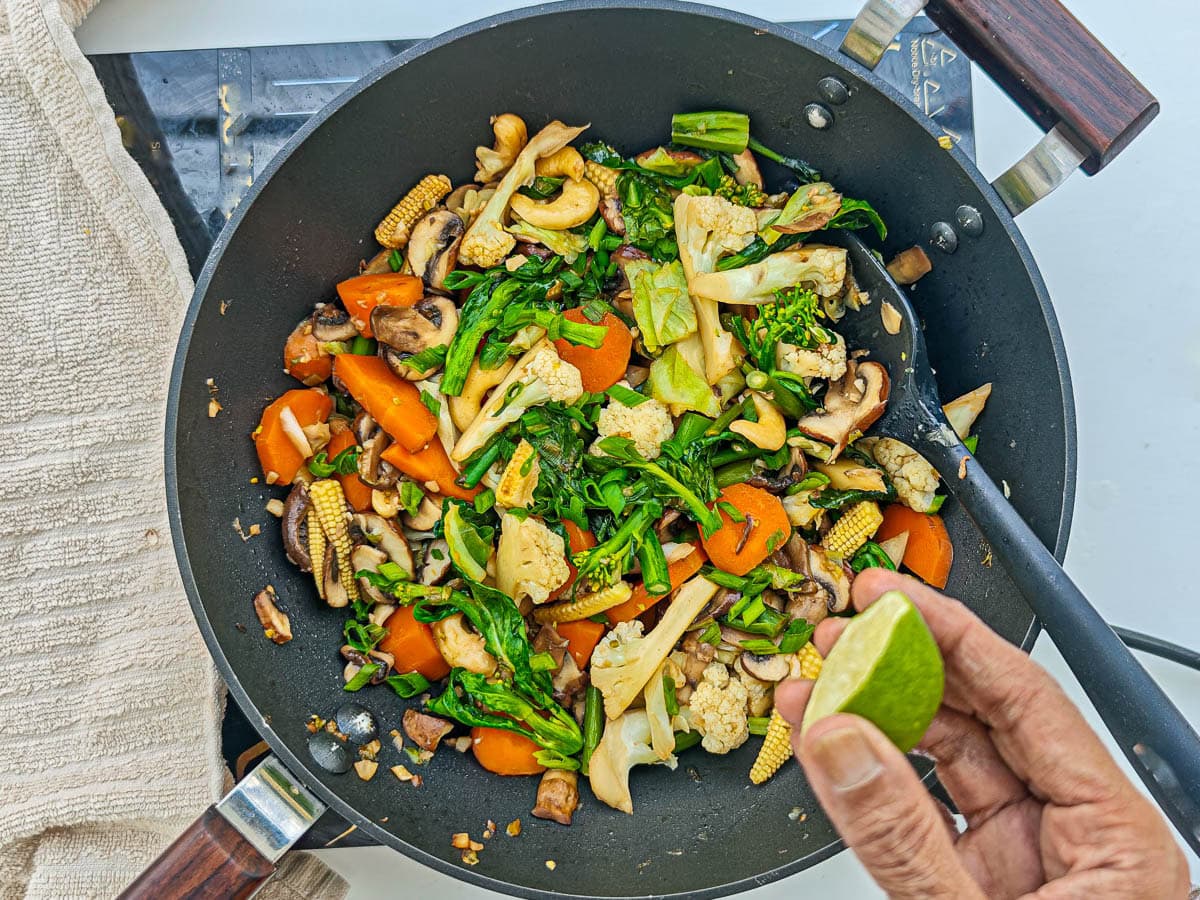
Turn off the stove and finish with a squeeze of lime juice.
Done! Your Thai stir-fried vegetables are ready to be relished.
What to serve with cashew vegetable stir-fry
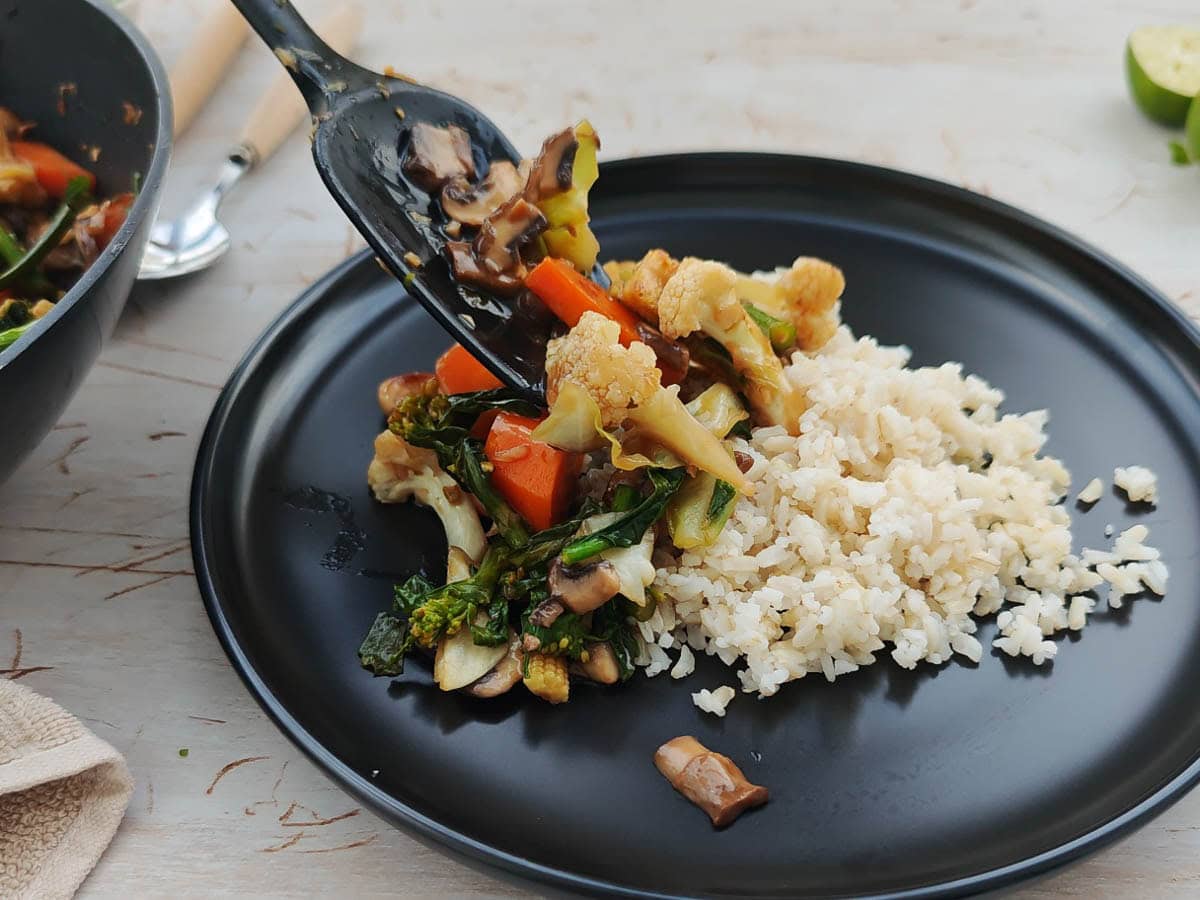
This Thai vegetable stir fry tastes great with a bowl of steamed jasmine rice, but you can easily turn it into a more wholesome meal with some protein on the side. Here are a few Thai-inspired favorites from my kitchen that go beautifully with it:
- Thai Basil Chicken Fried Rice: A flavorful one-pan meal with chicken, eggs and fragrant Thai basil.
- Thai Green Curry Fried Rice: For those days when you’re craving something with a little more Thai curry flavor.
- Thai Basil Tofu Stir Fry: A delicious plant-based option with garlic, chilies and fresh basil.
- Vegetarian Thai Fried Rice with Red Rice: A wholesome rice dish that makes a lovely vegetarian pairing.
- Easy Chicken Mince Stir Fry: Another quick and flavorful option for a satisfying weeknight meal.
What makes these stir-fried vegetables a healthier choice
This healthy Thai vegetable stir fry is about more than getting a serving of vegetables onto your plate. The combination of different vegetables, cashews and a simple sauce brings together fiber, vitamins, minerals, healthy fats and plenty of flavor.
1. A variety of vegetables means a variety of nutrients
One of the best things about this Thai mixed vegetable stir fry is the variety. Different vegetables provide different combinations of nutrients and plant compounds.
- Chinese broccoli: Also known as gai lan, this leafy green vegetable contributes fiber and micronutrients, including vitamins A, C and K.
- Carrots: A source of beta-carotene, which the body can convert into vitamin A. Vitamin A plays an important role in normal vision and immune function.
- Cauliflower and cabbage: These cruciferous vegetables provide fiber, vitamin C and other naturally occurring plant compounds.
- Mushrooms: Add a savory, almost meaty texture along with fiber and B vitamins.
- Baby corn: Adds a pleasant crunch and variety to the vegetable combination.
2. Cashews add more than crunch
Cashews are a delicious addition to this vegetable stir fry, but they also contribute nutritional value.
They contain unsaturated fats, some plant-based protein, fiber and minerals such as magnesium, copper and zinc. The fat in cashews also helps make the dish more satisfying and adds richness to the vegetables.
3. A simple sauce without unnecessary sugar
Unlike many homemade stir-fry sauces with several sweeteners and seasonings, this recipe keeps things simple with oyster sauce and low-sodium soy sauce.
Using low-sodium soy sauce is a useful way to manage the sodium contributed by soy sauce. However, oyster sauce also contains sodium, so the total sodium content depends on the quantities of both sauces used.
4. Peanut oil provides predominantly unsaturated fats
Peanut oil is a source of mostly unsaturated fats. The important thing is to use a measured quantity. You need enough oil (1 tablespoon) to stir-fry the vegetables and develop flavor, not so much that the dish becomes greasy.
5. Fiber helps make vegetables more satisfying
The combination of vegetables and cashews contributes dietary fiber. Fiber supports digestive health and can help regulate blood sugar and appetite. Including a variety of vegetables, nuts and other fiber-containing foods throughout the day is a practical way to improve overall fiber intake.
Easy Thai Vegetable Stir-fry Recipe
Equipment
Ingredients
- 1 tablespoon peanut oil
- 10 cashew nuts
- 5 stalks of spring onions white and green parts separated and chopped
- 4 cloves garlic minced
- 2 Bird's eye chilies (Thai red chilies)
- 1 carrot roll-cut or sliced into half moons or thick strips
- 1 cup cauliflower cut into florets
- 100 grams (3.5 ounces) baby corn halved lengthwise (1 cup)
- 200 grams (7 ounces) cremini mushrooms sliced (3 cups)
- 1 cup cabbage chopped into chunks
- ½ bouillon cube
- 200 grams (7 ounces) Chinese broccoli (baby kai lan) separate thick stalks from leaves
- 2 tablespoons oyster sauce
- 2 tablespoons low sodium soy sauce
- 1 tablespoon lime juice
STEP BY STEP IMAGES
Scroll back to find detailed recipe photos!
Instructions
1. Prepare the aromatics and vegetables
- Separate the white and green parts of spring onions and chop them.
- Mince the garlic. Make a small slit on each chili.
- Separate the vegetables into 3 groups:
- Group 1: Firm vegetables like carrots, cauliflower and baby corn. Separate the thick stems of Chinese broccoli from the leaves and add to this group. They make roughly 3 to 3½ cups.
- Group 2: Soft vegetables like cabbage. Roughly chop them into big chunks. Add sliced mushrooms and/or diced tofu to this group. Together they make about 4 cups.
- Group 3: Leafy vegetables like spinach and Chinese broccoli (kai lan). Green parts of spring onions also belong to this last group. This group makes up about 2 cups, tightly packed.
2. Stir-fry cashews and aromatics
- Heat peanut oil in a wok or wok pan. Add the chopped white parts of spring onions. Stir-fry for a couple of minutes.
- Add cashews, minced garlic and slit Bird’s eye chilies.
3. Stir-fry firm vegetables
- Add the first group of vegetables. Stir-fry on high heat for about 5 minutes or until they turn slightly soft, but still firm.You can sprinkle a little water so the veggies don’t get scorched.
4. Stir-fry soft vegetables
- Add sliced mushrooms or tofu, if using. Stir for a couple of minutes, then add chopped cabbage.
- Stir for a few more minutes. Add the crushed bouillon cube.
5. Stir-fry leafy vegetables
- Add the Chinese broccoli and the green parts of spring onions. Stir-fry for a minute or two.
6. Finish with stir fry sauce
- Add the oyster sauce and soy sauce. Stir until the sauce starts boiling.
- Turn off the stove and finish with a squeeze of lime juice.
Notes
-
Cut vegetables into similar-sized pieces. This helps them cook evenly.
-
Prepare everything before heating the wok. Stir-frying is quick, so you don’t want to be chopping vegetables while others are cooking.
-
Add vegetables according to cooking time. Start with firmer vegetables followed by mushrooms and soft vegetables, then finally leafy veggies, adjusting the order to their size and thickness.
-
Leafy vegetables: Usually, Chinese broccoli is used for stir-frying, since they hold their shape better than the usual spinach. You can use any kind of spinach you have, provided you don’t cook it for too long (about 1 minute is sufficient). Don’t wait for it to wilt. It will get cooked in the residual heat anyway.
-
Keep the vegetables slightly crisp. They should be cooked but retain some bite.
- Add the sauce towards the end. This allows it to coat the vegetables without making them soggy.
- Finish with fresh lime juice. Add it off the heat for a bright, fresh flavor.
★★★★★Did you try this recipe? Please give a star rating in the comments below ★★★★★
HUNGRY FOR MORE? Join over 1000 home cooks like you who subscribe to my weekly newsletter to get all the latest recipes right in your inbox. Or follow me on your favorite social media: Facebook, Pinterest, Instagram, and YouTube. Thank you and happy cooking!